
Insight usage remained high in July and August 2026. We last reported on how publishers are using Insight’s AI tools at the end of June. The past two months have been busy, so we looked at the data to understand what’s going on.
AI Is Becoming an Established Part of the Workflow
We saw publishers using Insight’s AI tools to support real production work, including complex jobs like proofreading and EPUB accessibility. They’re uploading their backlists into the platform and running jobs with their internal standards and criteria.
Publishers are evaluating the results in more detail, setting clear expectations on what AI should deliver, and focusing on practical uses in daily work.
Up next for many is connecting Insight to their existing systems.
One thing stands out when we look at how publishers used Insight over the last two months: AI is becoming a more established part of publishing workflows.
More Full-Book Production Work
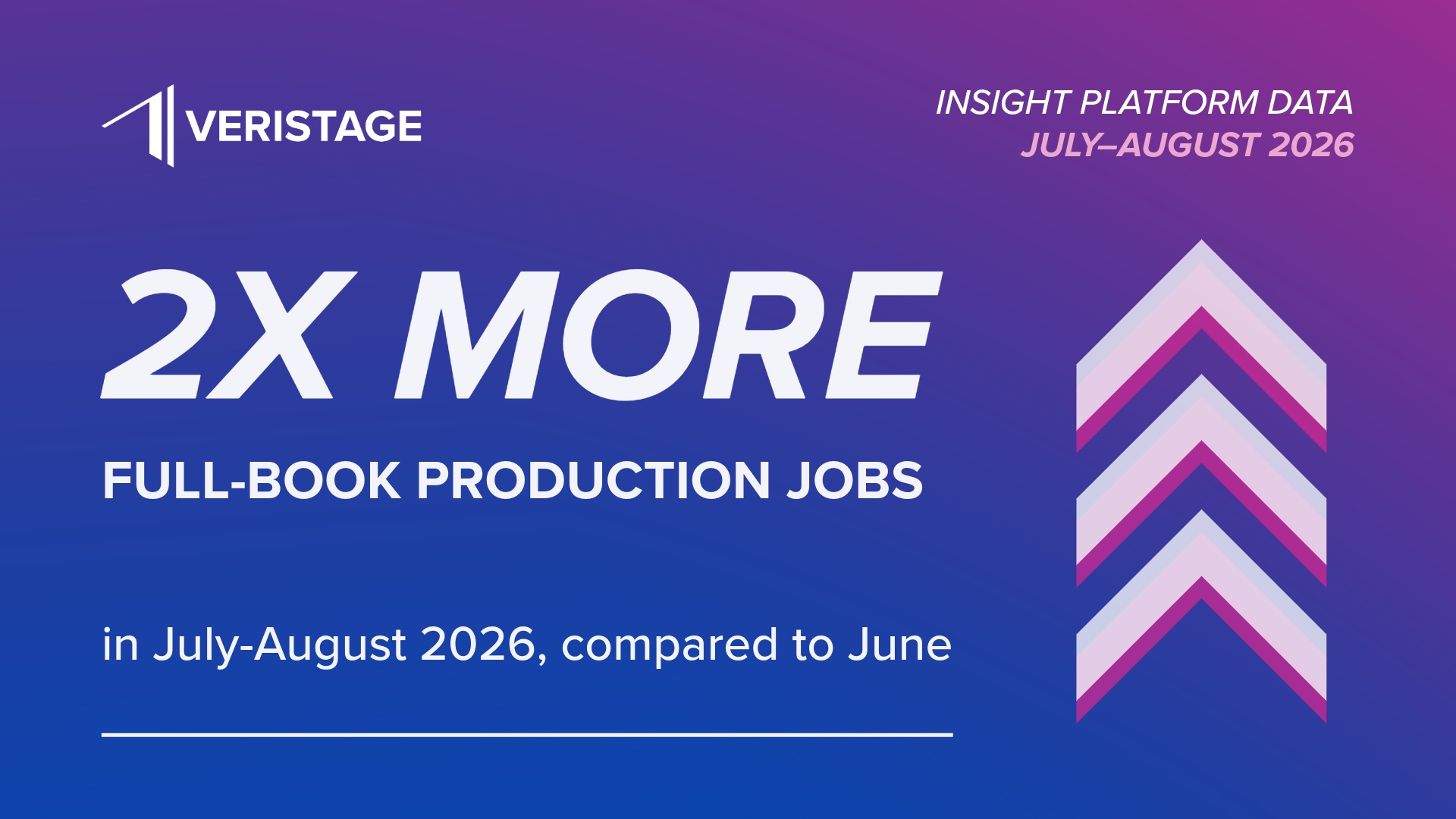
In July and August, Insight users ran twice as many full-book production jobs as they did in June. Proofreading has become one of the top three processes on the platform. Other processes like alt text for EPUB accessibility, translation, and index creation are also high on the list.
We attribute some of this growth to more consistent and reliable results AI can deliver on long, complex jobs. We’re also working with more of our customers to configure our tools to match their internal conventions, like proofreading with house style guides and marking up manuscripts for typesetting.
The Backlist Is Now Active
More publishers are uploading their entire backlists and related data into Insight. In July and August alone, we imported backlists for ten different companies, with more in progress.
One major driver of this is AI-powered search. Instead of searching for titles by keywords, you can ask “Which of my YA romance titles under $20 sold more than 10,000 copies in 2025?” or “Show me all my popular science books that mention space travel.”
Publishers are also looking at this as a way to reactivate older content, like updating older EPUBs to current standards and converting scanned PDFs into editable, structured files. We’ve recently completed several projects to refresh backlist metadata for today’s standards and digital discovery.
Accessibility Is Integral
Usage of our alt-text tools during July and August was, on average, four times higher than in June. Some of the most detailed feedback we’ve received from our customers has been related to EPUB accessibility.
Publishers are increasingly asking us to incorporate their in-house specifications and preferences, on top of EPUB and accessibility standards. This suggests that accessibility is becoming a standard part of the publishing process, just like proofreading and metadata.
Experience With AI Is Growing
Over the last six months, and especially in July and August, Insight users have clearer expectations when evaluating, testing, and using AI.
They’re running structured tests, documenting the results, and asking for specific improvements. They’re aware of what AI can do right now, what the potential pitfalls are, and what the benefits can be.
When we released a new version of our AI-powered backlist search in July, nine publishers quickly sent us detailed evaluations of what worked, what didn’t work, and what they needed.
Systems That Work Together
This summer, we received more questions about integrating Insight with systems publishers are already using, automating tasks, and accessing our API and MCP.
Once publishers see useful results from Insight, they start asking how to move the information where they need it. Questions ranged from how to automatically import manuscripts and sales data to methods for distributing ONIX and integrating with title management systems.